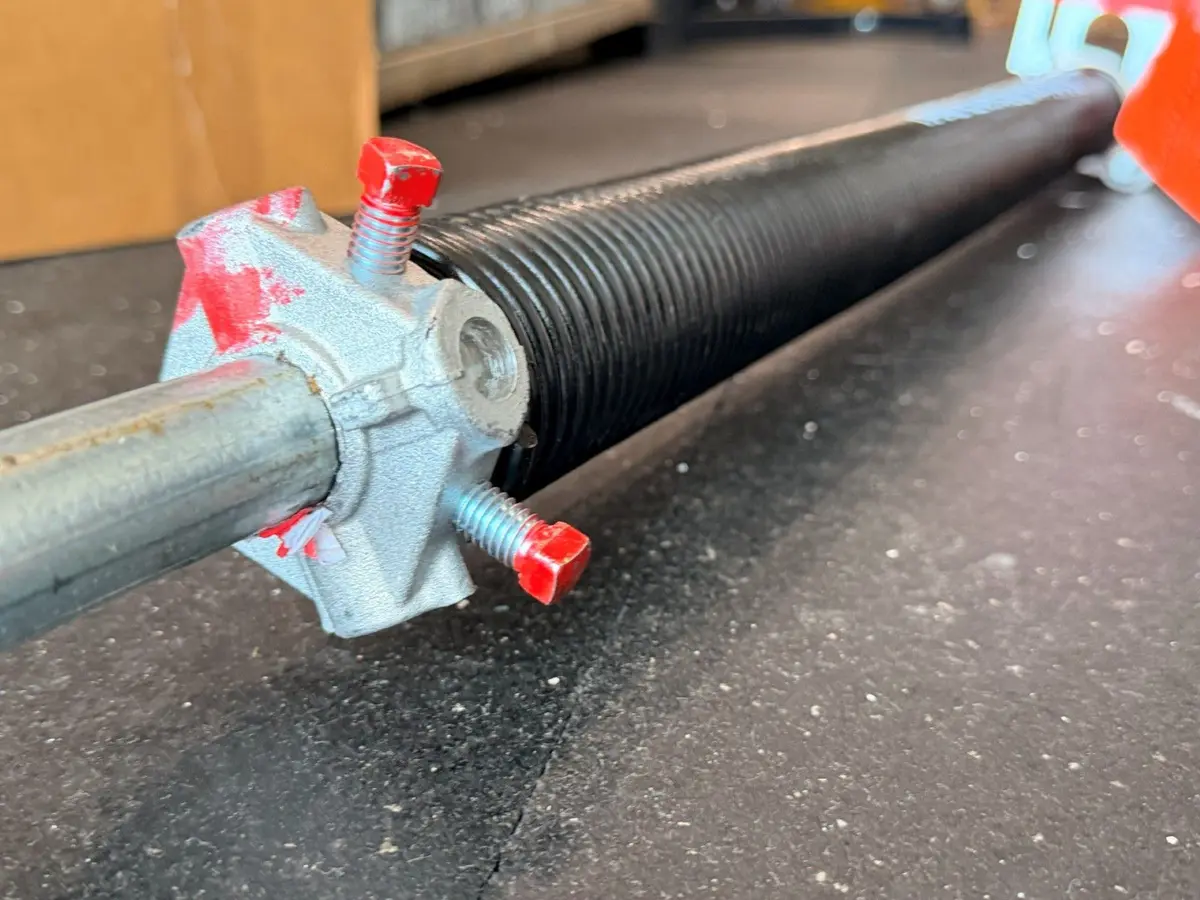
Every sectional garage door is lifted by springs. There are two designs, and knowing which one you have helps you understand repairs, safety and what an upgrade would involve.
How to tell which you have
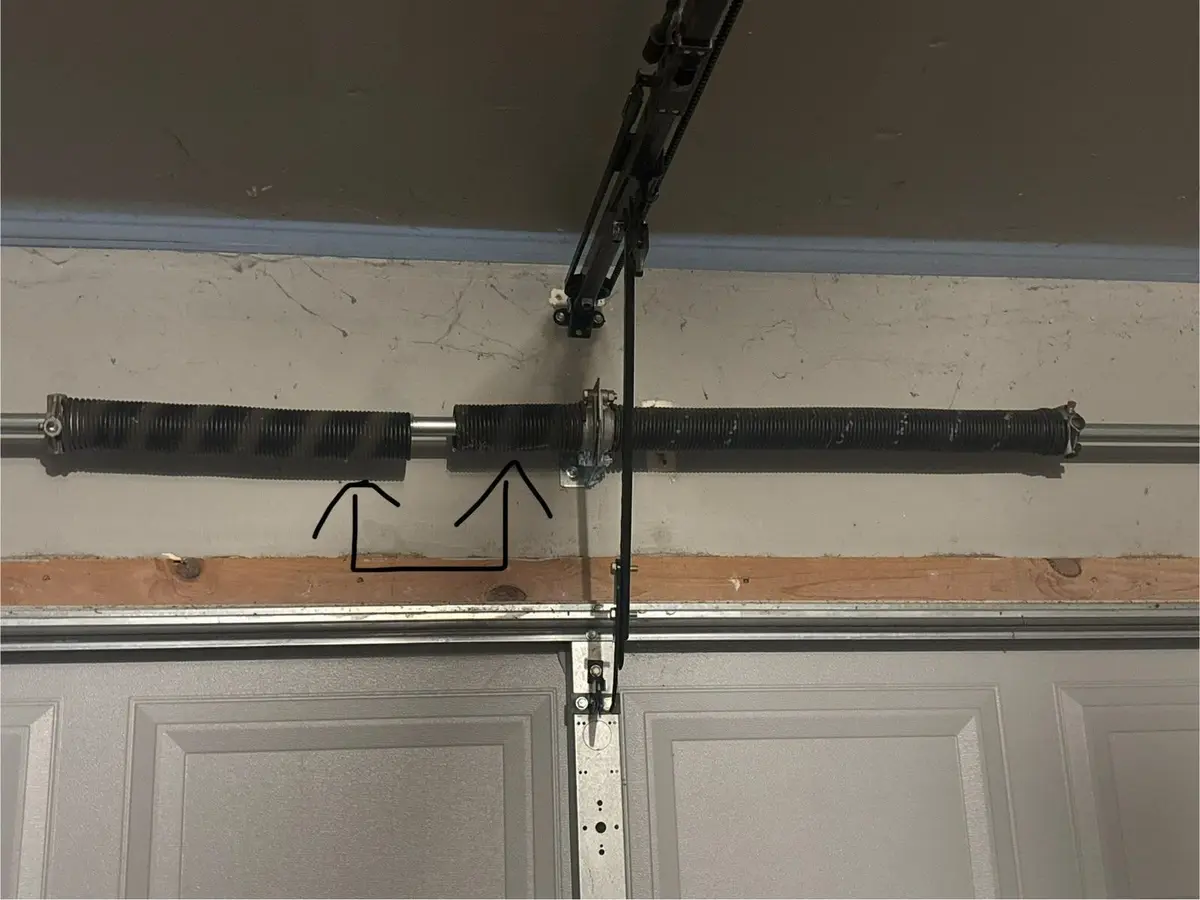
Stand inside the garage with the door closed. If you see one or two tightly wound coils on a metal shaft directly above the door, you have torsion springs. If you see long, thinner springs running along the horizontal tracks on each side, you have extension springs.
Torsion springs
Torsion springs store energy by twisting. As the door closes, cables wind off drums on the shaft and twist the spring tighter; as it opens, the spring unwinds and turns the shaft to lift the door.
- Smoother, more controlled movement
- Better balance, especially on heavy and wide doors
- Longer service life in most cases
- When one breaks, it stays on the shaft
Extension springs
Extension springs store energy by stretching. They are attached to pulleys and cables and extend as the door closes.
- Lower parts cost
- Work where there is very little headroom above the door
- More exposed moving parts, and more of them to wear
- Must have a safety cable through each spring, so a broken spring is contained
Should you convert to torsion?
If your extension spring door is being re-sprung anyway, a torsion conversion is worth considering. It needs a few inches of clear space above the door for the shaft. The door will run more smoothly and with fewer parts in motion along the tracks.
A note on safety
Both spring types hold enough energy to cause serious injury. Adjusting or replacing them is work for a trained technician. See garage door spring repair.